In many menswear stores, belts now tend to fall into two groups: the classic hole-punch belt most men already know and the ratchet belt, also called a click belt or slide belt. At first glance, they can look similar. The difference is in the way they adjust, fit and feel once you wear them.
This guide breaks down the real difference between a ratchet belt and a traditional belt, where each one wins and which is actually worth buying.
How Does a Ratchet Belt Actually Work?
A traditional belt has punched holes, usually five or six, spaced about an inch apart. You slide the prong into whichever hole fits and buckle up. It works, but your options are limited to those fixed positions.
A ratchet belt works differently. The buckle has a small ratcheting mechanism on the back that grips a series of teeth running along the inside of the strap. You feed the strap through, press a release button to adjust and the buckle locks at any position in ¼-inch increments, giving you around 40 fit options within a standard belt length.
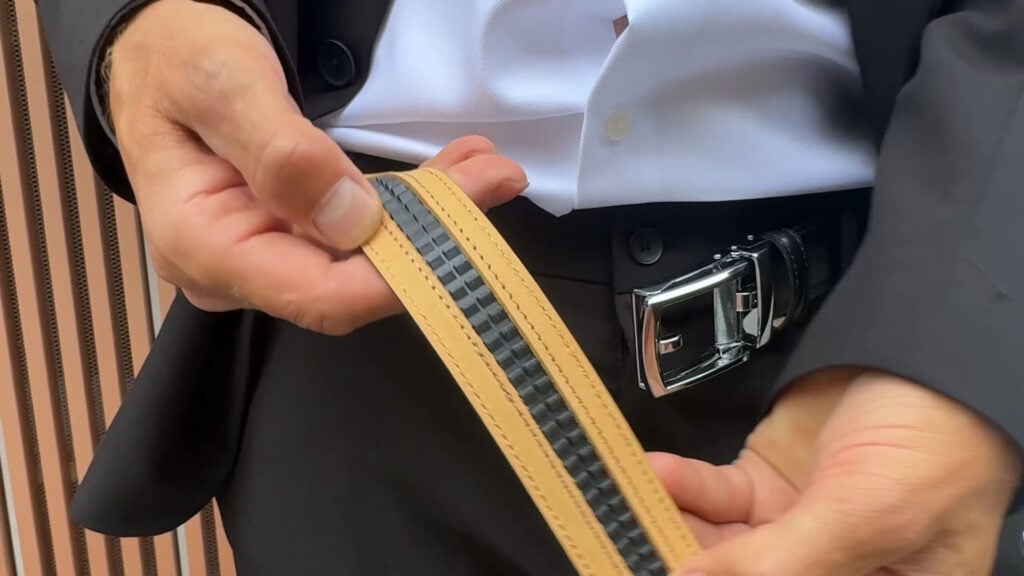
The difference becomes obvious on days when your waist isn’t exactly where the next hole lands: after a big meal, after a workout or simply at the end of a long day. A traditional belt leaves you choosing between slightly too loose and slightly too tight. A ratchet belt lets you set it exactly right.
The strap is also trimmed at the back rather than fed through a keeper loop, which gives the front a cleaner, uninterrupted line.
For a look at the different belt types worth knowing about, see our guide to 5 types of belt every man should own.
Fit and Comfort: Where Ratchet Belts Have a Clear Edge?
The fit gap between ratchet and traditional belts is the kind of thing you only notice once you’ve worn both. Most men who switch to a ratchet belt don’t go back, not because of the style, but because of how much more comfortable a precise fit feels across a full day.
That half-inch gap between holes is the core limitation of the traditional design. It sounds trivial. By the end of the day, it isn’t.
Ratchet belts avoid that problem. You can adjust the belt in smaller steps, so it sits exactly where it feels comfortable. Because there are no holes, the pressure is spread more evenly along the strap instead of pulling on one fixed point.
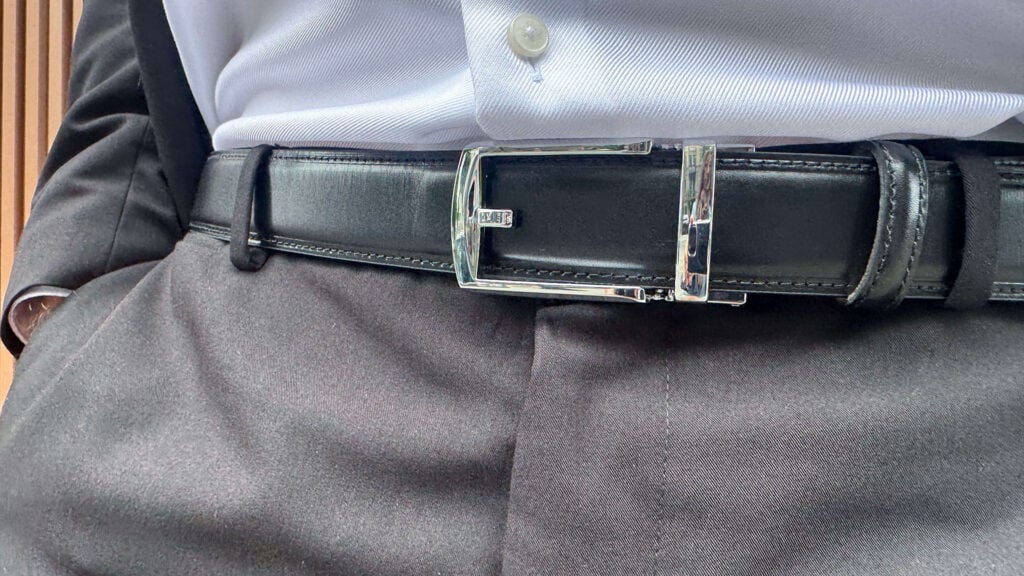
This is one reason ratchet belts have become popular with professionals who sit for long periods. When you’re at a desk all day, an exact fit matters more than it does when you’re moving around constantly.
Browse our full collection of ratchet belts for men to see the range of leathers and buckle styles available.
Durability and Longevity: Which Belt Lasts Longer?
The honest answer is: it depends more on the leather quality than the buckle mechanism. But the ratchet system removes one of the most common failure points of a traditional belt.
On a traditional belt, the holes are where wear concentrates. The prong creates friction and pressure at the same spot every day. Over time, that hole stretches, the leather around it thins and eventually it tears. This is especially common with lower-grade leathers, but it happens with good ones too, just more slowly.
On a ratchet belt, wear is spread across the full inner length of the strap rather than focused on one or two points. There’s no prong gouging the same spot every day. The strap also goes straight through the buckle instead of folding back through a loop. This puts less stress on the end of the belt, where traditional belts often begin to crack.
When buying a ratchet belt, pay close attention to the buckle. Cheap mechanisms can wear out: the teeth may strip, the release button may stick, or the buckle may stop gripping the strap properly.
A good ratchet buckle made from solid brass or zinc alloy should last for years. Many ratchet buckles can also be removed and used with another strap, which makes the belt easier to repair or update over time.
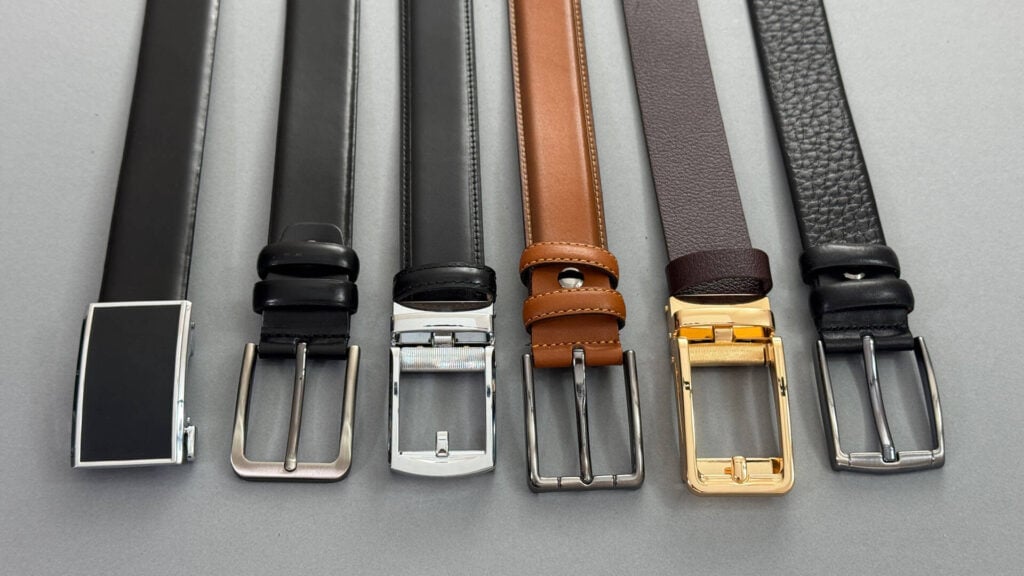
For more on how leather quality affects long-term wear, see our full-grain vs genuine leather belt guide.
Style and Versatility: Can a Ratchet Belt Look as Good as a Traditional One?
In most situations, yes.
A traditional belt has a visible tail, a keeper loop and visible holes on the strap. This is the classic look and it reads as formal or conventional.
A ratchet belt has a cleaner face. No visible holes and the tail is trimmed at the back of the buckle rather than hanging out the front. This gives the front of the belt a smooth, unbroken line that suits modern workwear and smart casual dressing well.

For business casual, smart casual, jeans or chinos, a ratchet belt works well in almost every setting. For black tie or morning dress, a traditional smooth leather dress belt is still the more appropriate choice, and the prong-and-hole look reads as more formal alongside tailored clothing. But those occasions are the exception for most men, not the rule.
The leather belts market was valued at USD 7.98 billion in 2025, according to Coherent Market Insights, and is expected to keep growing in the coming years. Slide and ratchet systems are part of that shift, with steady demand as more men look for belts that feel cleaner, easier to adjust and more comfortable for everyday wear.
For more pairing ideas, see our guide on how to style a cognac leather belt with jeans, chinos and dress pants.
When Does a Traditional Belt Still Make Sense?
Traditional belts aren’t obsolete. For a few specific situations, they’re still the better choice.
- Formal dress codes. If you’re dressing for events where the dress code is strict, a traditional dress belt in smooth leather is the safer option.
- Specific aesthetics. Western belts, heritage workwear styles and some vintage-influenced outfits work better with a traditional belt. The ratchet mechanism doesn’t fit those visual contexts as naturally.
- Simplicity. A traditional belt has no moving parts. If you want zero mechanical complexity, the traditional design has that advantage.
- Entry-level budget. A basic traditional belt can be inexpensive and reliable. Entry-level ratchet belts vary more in quality at the same price point, so a traditional belt in decent leather may be the safer low-cost option.
Which One Should You Actually Buy?
For everyday use, a ratchet belt is the better choice for most people. The fit is more precise, the comfort is better across a long day and the strap tends to wear more evenly over time.
Most men don’t keep using ratchet belts because of the look. They keep using them because the fit is easier. Once you get used to adjusting the belt exactly where it feels right, going back to fixed holes feels less comfortable.
The one caveat: buy a ratchet belt with a quality mechanism. A cheap buckle that strips or sticks will turn a good concept into a frustrating one. Look for solid metal hardware in brass or zinc alloy and a release button that moves cleanly. The strap matters too. Full-grain leather wears better than bonded or split leather and looks better for longer.
Browse our ratchet belt collection to find full-grain leather options with quality buckle mechanisms.

How to Shorten a Ratchet Belt?
Most ratchet belts are sold in one or two longer sizes rather than a fixed range. This keeps things simple, but it means you’ll usually need to trim the strap before wearing it for the first time.
The process is straightforward. You remove the buckle, cut the strap to the right length from the buckle end, then reattach the buckle. No special tools are needed: a sharp craft knife or a pair of strong scissors will do the job cleanly.
The video below walks through the full process step by step:
The key thing to get right is the measurement. Measure your waist where you actually wear the belt, not your trouser size, then add a few centimetres so the buckle sits at the right position on the track. It’s easy to trim a little more if needed, but you can’t add length back, so err on the side of leaving it slightly longer on your first cut.
For a written step-by-step guide, see our full tutorial on how to shorten a leather belt at home.
Frequently Asked Questions
A traditional belt uses punched holes and a prong buckle, giving five or six fixed fit positions spaced one inch apart. A ratchet belt uses a hidden track and a locking buckle that adjusts in ¼-inch increments across around 40 positions. The result is a more precise fit and more even wear across the strap over time.
Yes. “Click belt”, “ratchet belt” and “slide belt” all describe the same mechanism: a buckle that locks along a toothed track rather than through punched holes. The click refers to the sound the ratchet makes as you tighten it.
For most business and smart casual settings, yes. The clean strap with no visible holes gives a ratchet belt a neat, modern look that works well with suits and dress trousers. For black tie or very formal dress codes, a traditional smooth leather dress belt may be more appropriate.
Ratchet belts tend to outlast traditional belts at the strap level because there are no holes to stretch or tear. The buckle mechanism is the component to watch: quality hardware lasts for years, while cheap mechanisms can strip or stick within months. See our guide on leather quality to know what to look for before buying.
Yes. Most ratchet belts are made to be cut down at home, so you can adjust the strap to your waist before wearing it. You simply trim the non-buckle end with sharp scissors or a craft knife, then reattach the buckle. That’s why many ratchet belts come in one or two longer sizes rather than lots of fixed lengths.
The Bottom Line
Both belt types work. The question is how well.
A traditional belt is simple, classic and appropriate for formal settings. A ratchet belt is more precise, more comfortable for all-day wear and easier on the strap over time. For everyday use, the ratchet belt wins.
If you’re still wearing a traditional belt out of habit rather than preference, it’s worth trying a ratchet belt in good leather. Most people who do don’t go back.
Browse our ratchet belts for men and find the right fit.
Products by Category
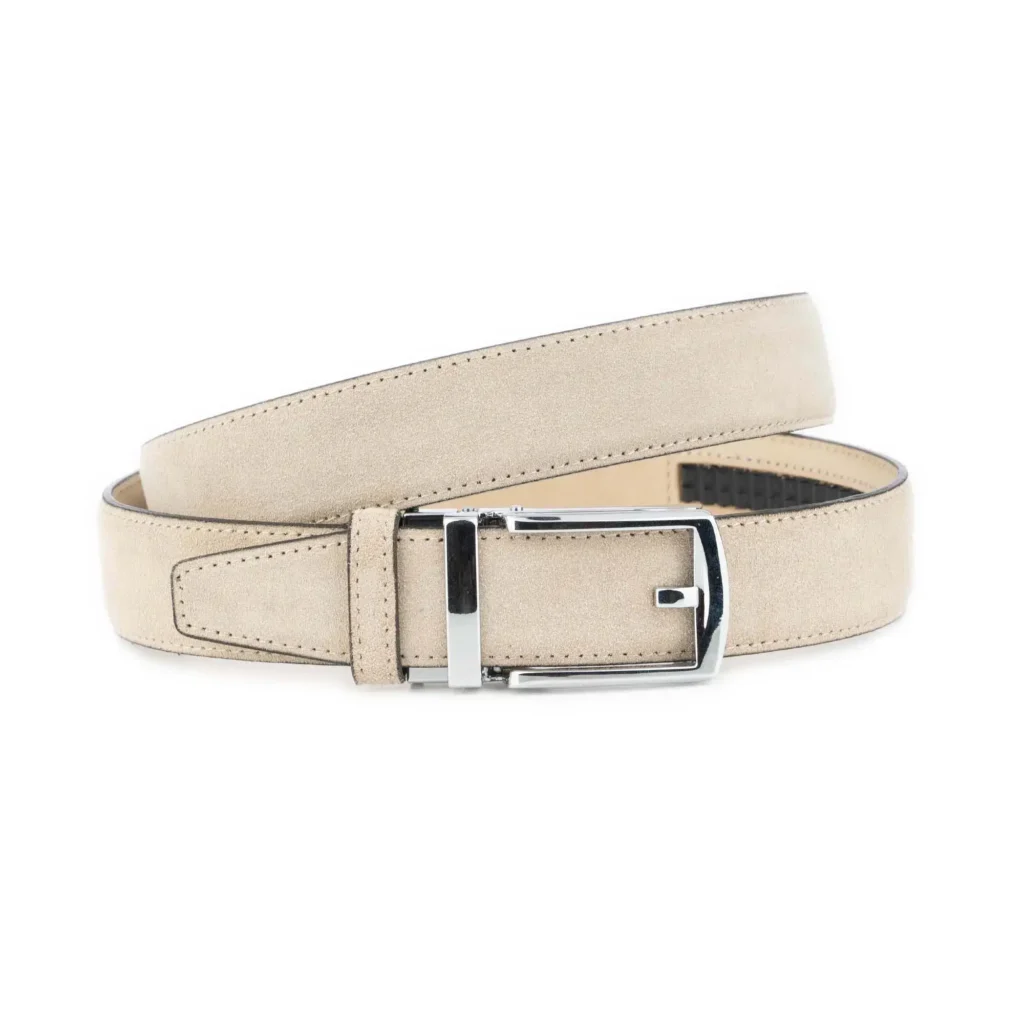
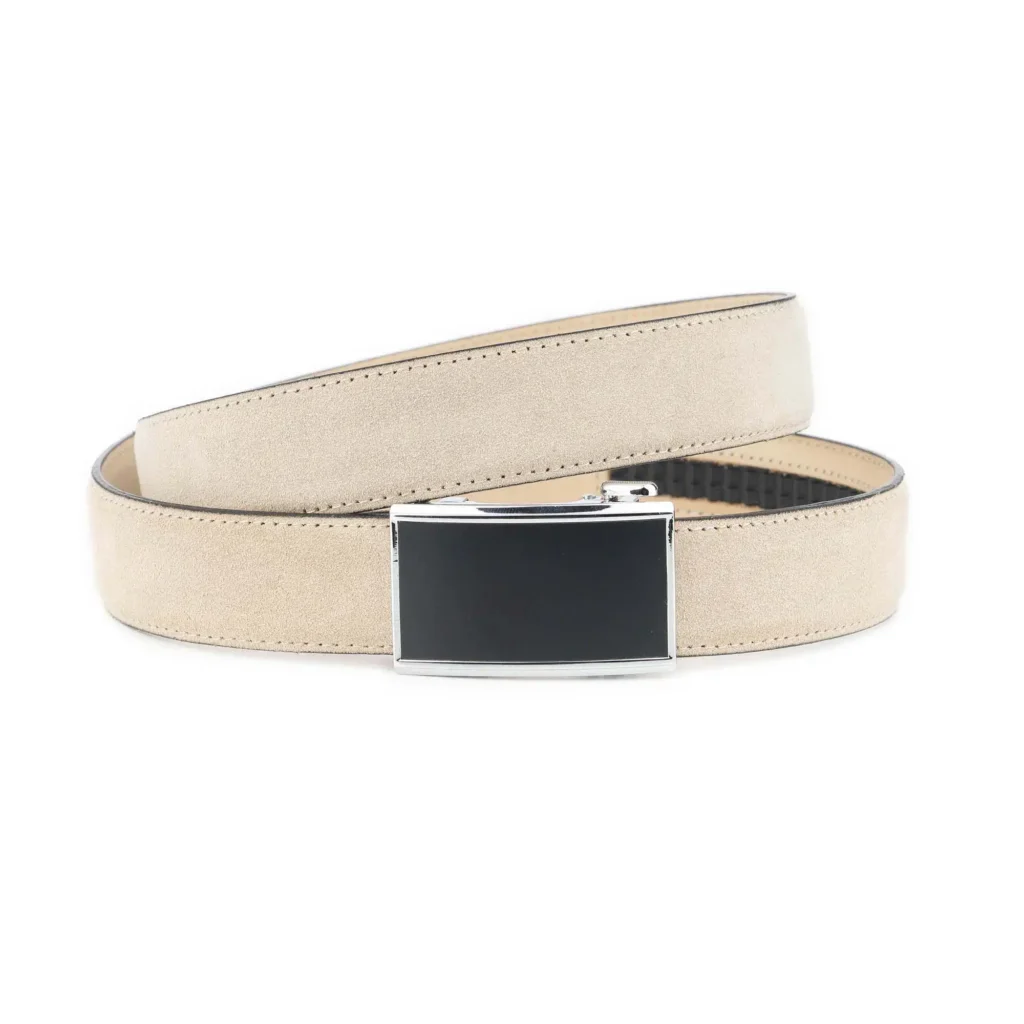
Men’s Ratchet Belt With Classic Silver Buckle – Beige Suede Leather
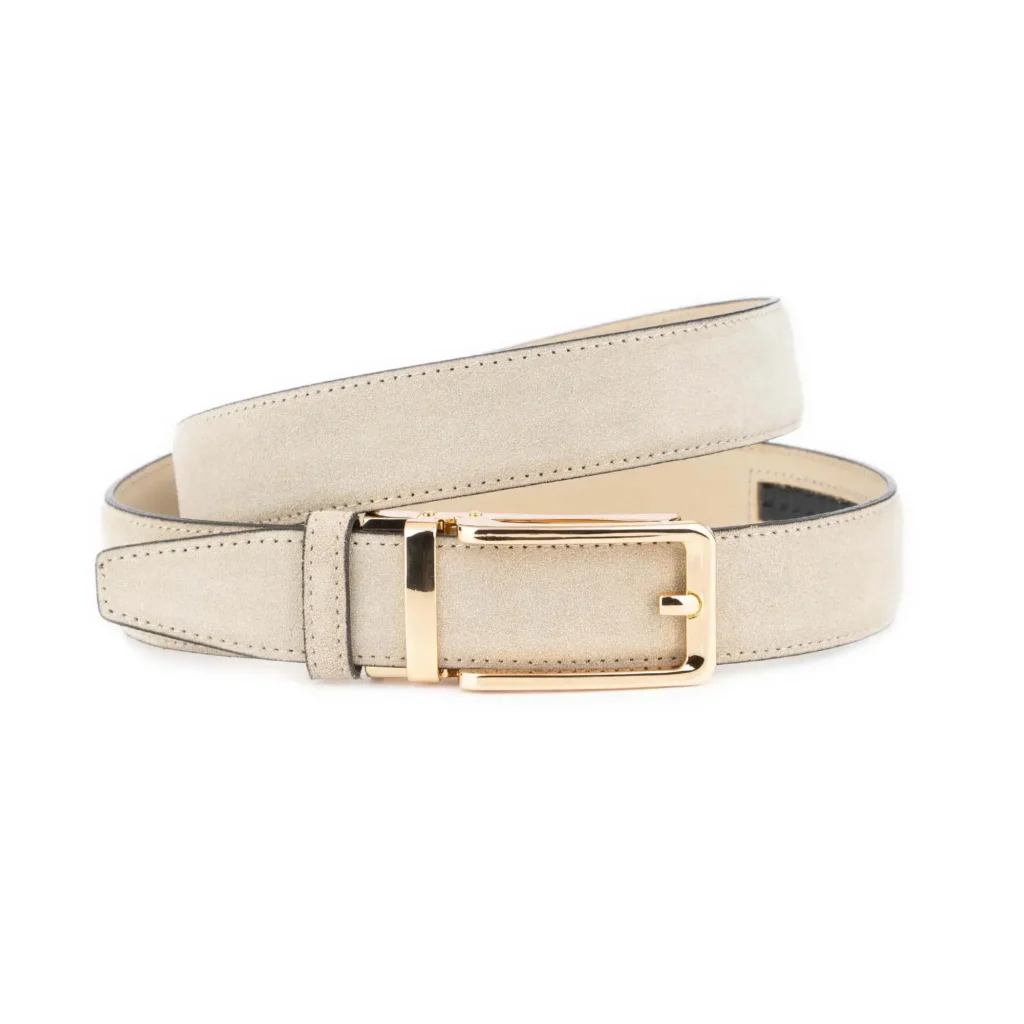
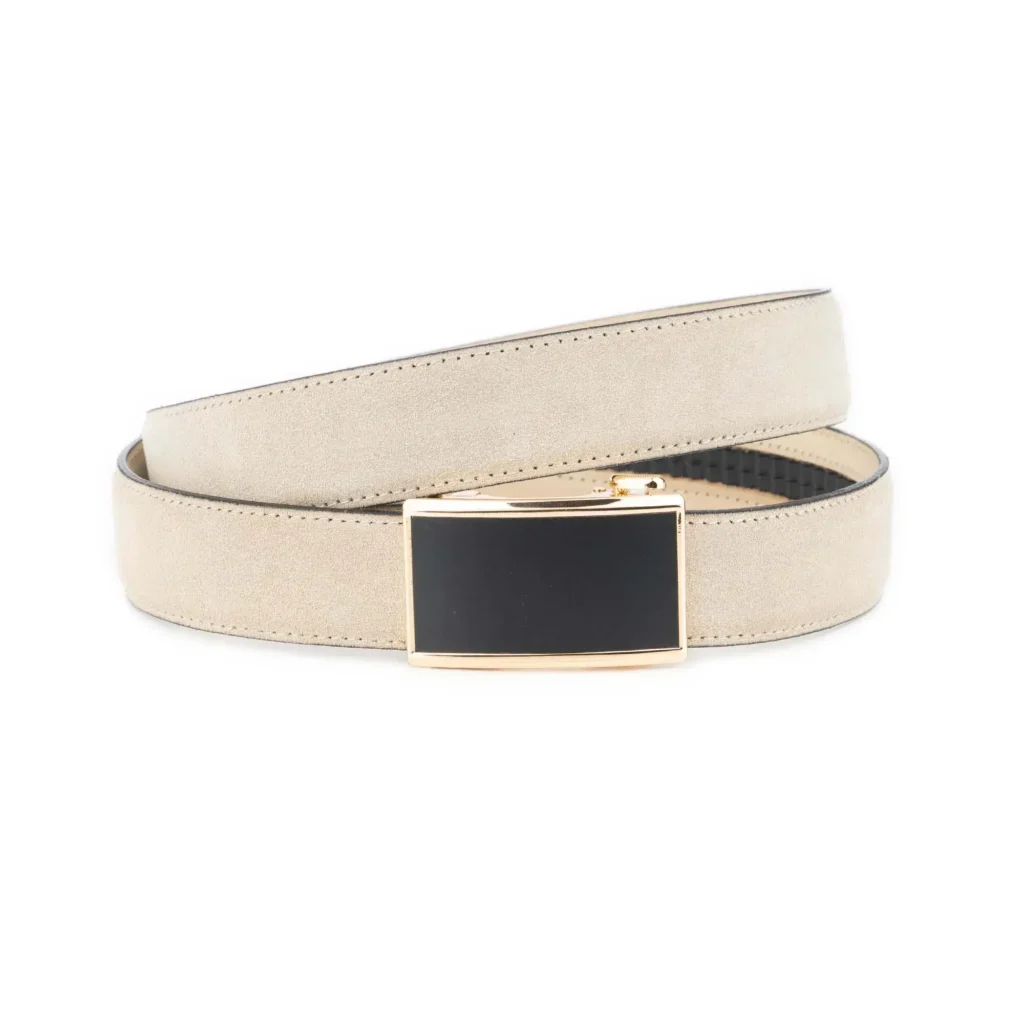
Original price was: $106.95.$85.56Current price is: $85.56.Men’s Ratchet Belt With Classic Gold Buckle – Beige Suede Leather
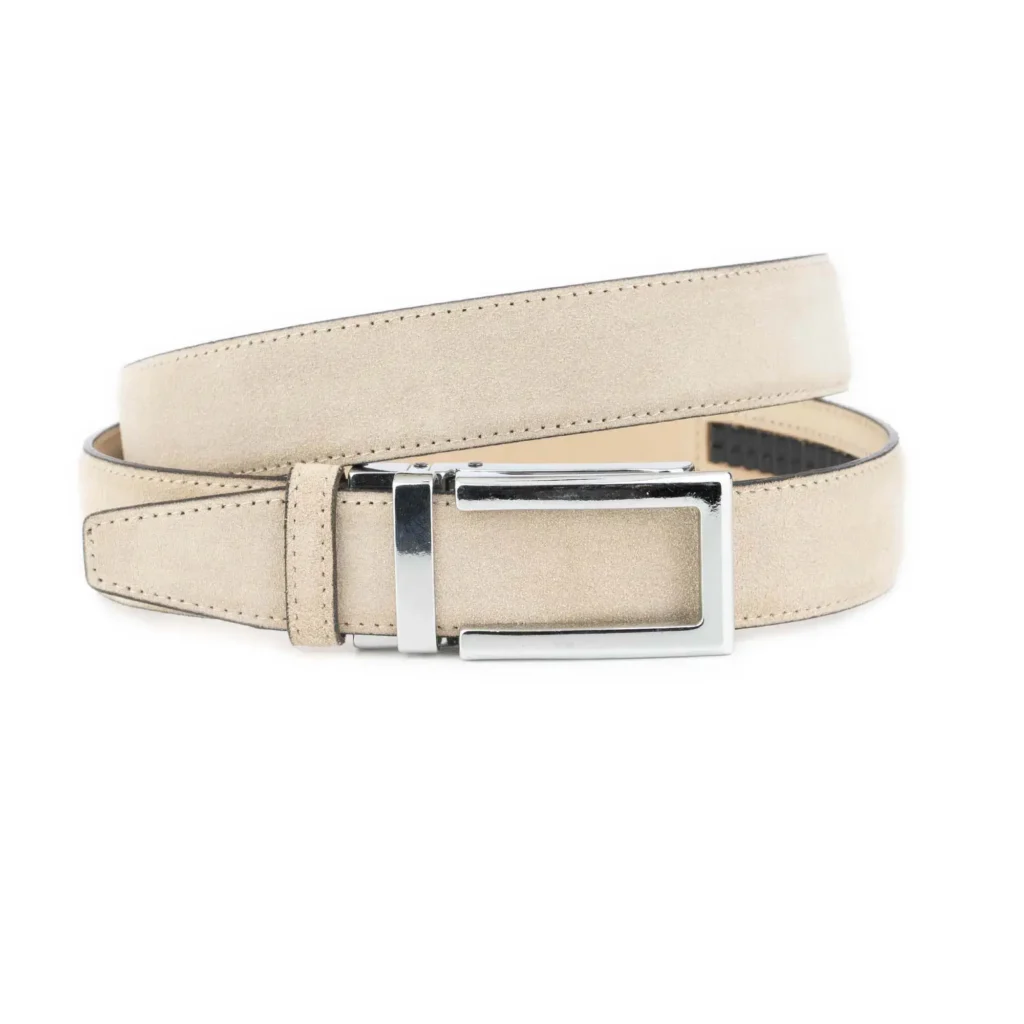
Original price was: $106.95.$85.56Current price is: $85.56.Men’s Slide Belt With Silver Buckle – Beige Suede Leather
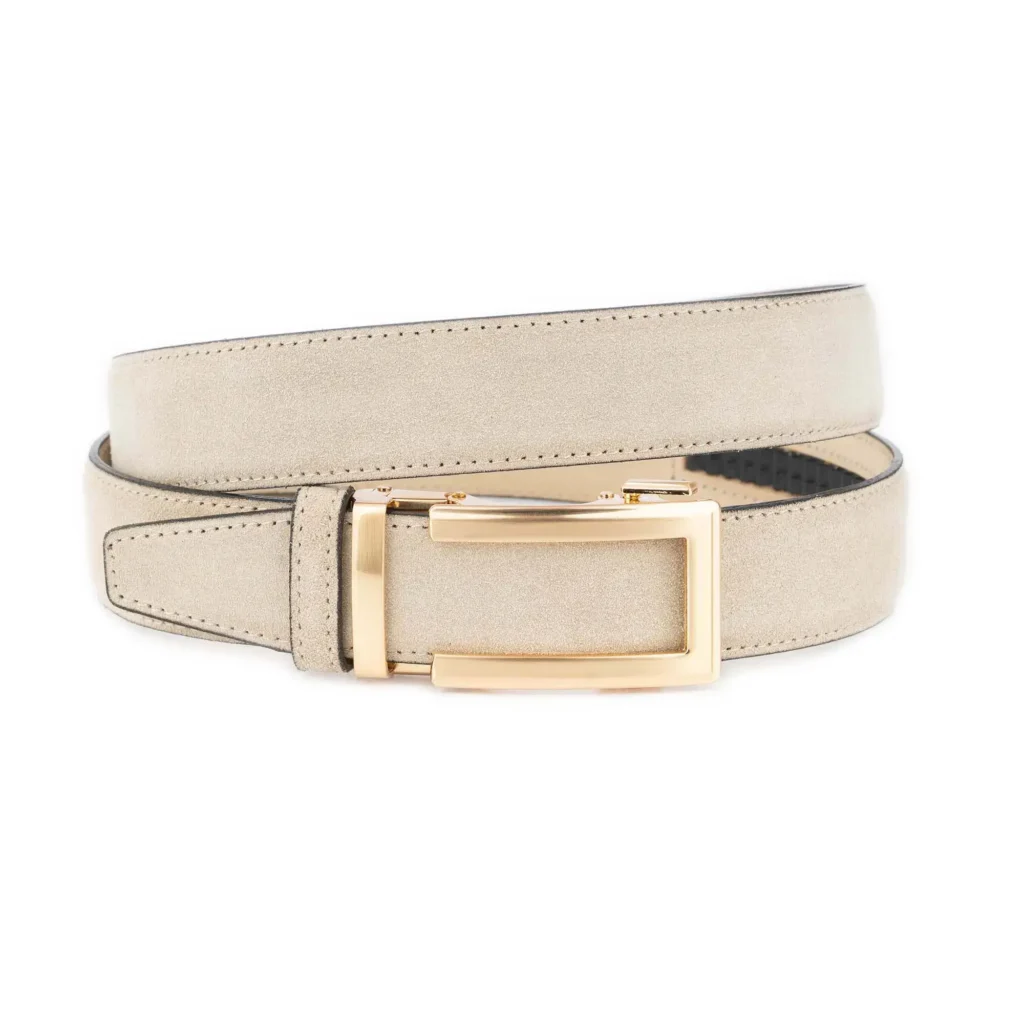
Original price was: $106.95.$85.56Current price is: $85.56.Men’s Slide Belt With Gold Buckle – Beige Suede Leather
Original price was: $106.95.$85.56Current price is: $85.56.Beige Suede Men’s Ratchet Belt With Silver Buckle
Original price was: $106.95.$85.56Current price is: $85.56.Beige Suede Men’s Ratchet Belt With Gold Buckle
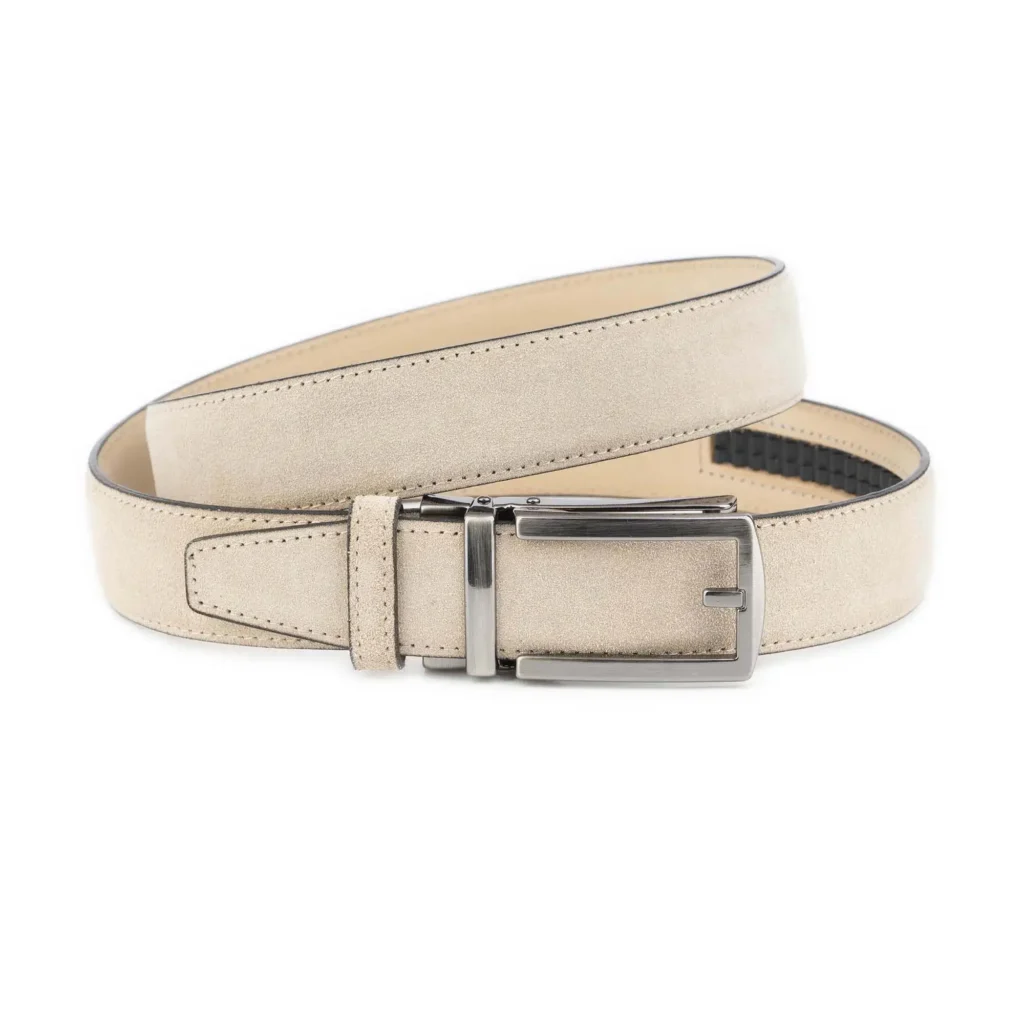
Original price was: $106.95.$85.56Current price is: $85.56.Men’s Ratchet Belt – Beige Suede Leather with Shiny Gray Buckle
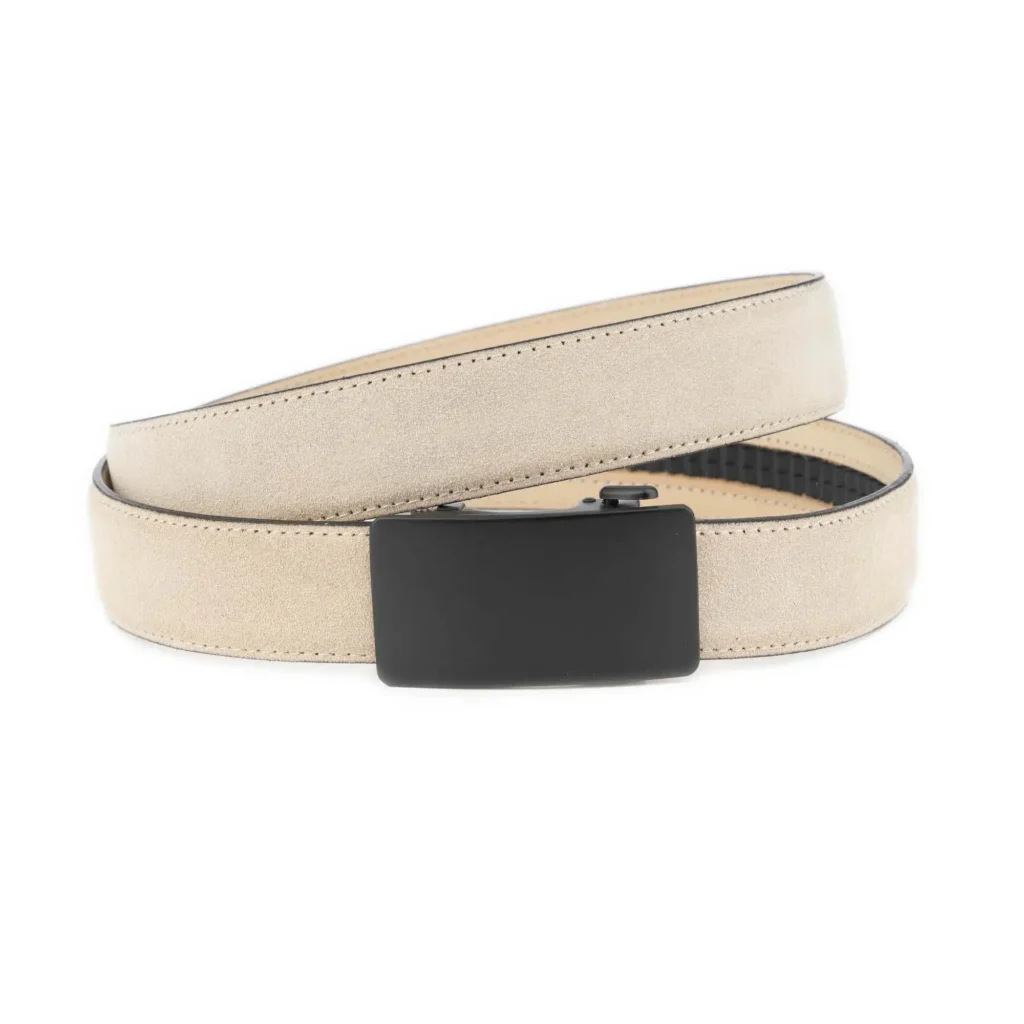
Original price was: $106.95.$85.56Current price is: $85.56.Men’s Slide Belt with Black Buckle – Beige Suede Leather
Original price was: $106.95.$85.56Current price is: $85.56.